
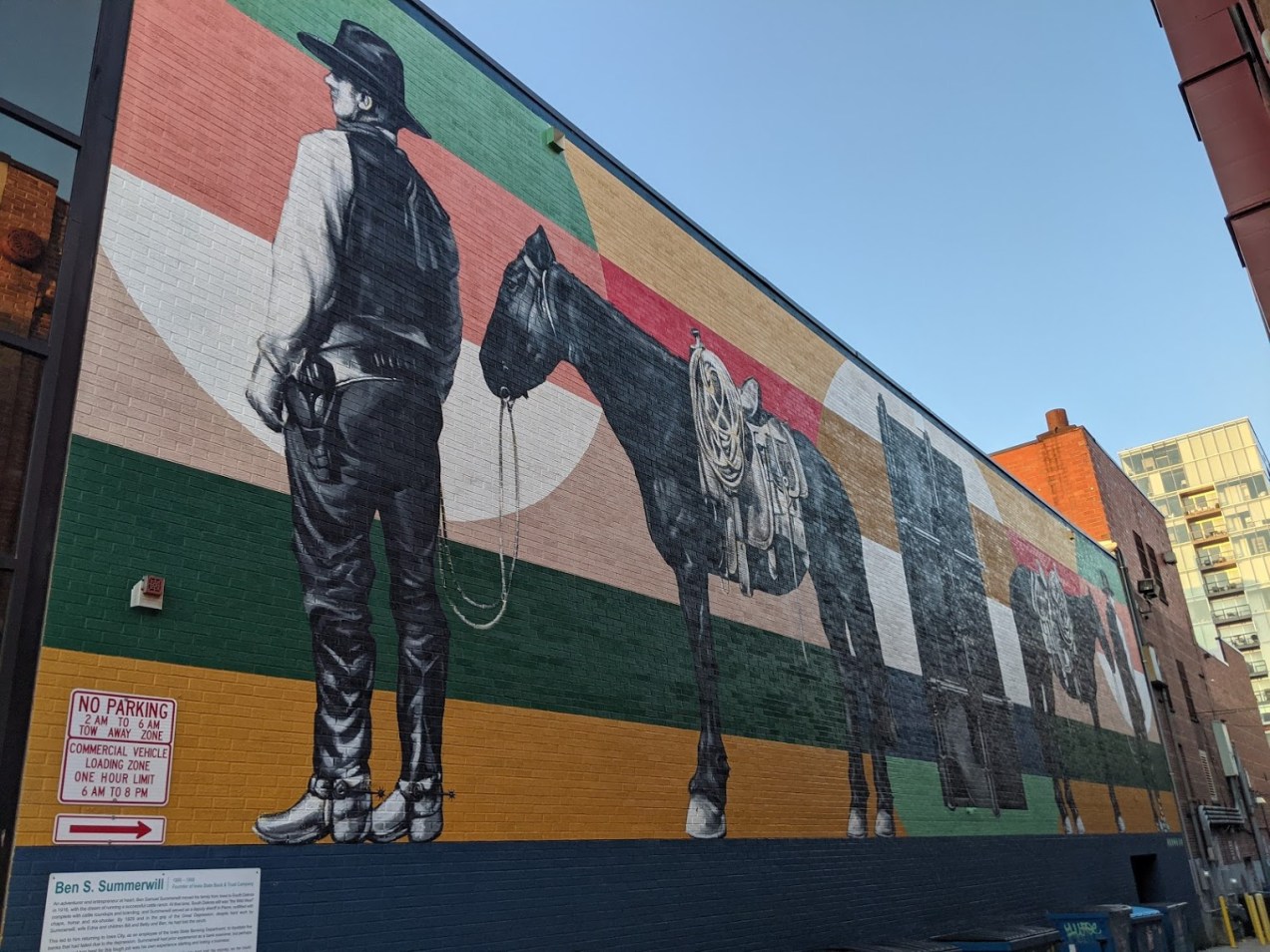
There’s tremendous anxiety in traveling, I find, to make sure you see it all.
“See it all” so the trip isn’t wasted — that you experience every single pleasure and cram each piece of knowledge you can fit into your brain in a short period of time.
That’s a fine and valid approach, but allow me to rebut firmly: It’s not possible to see everything worth noting, in any city, even if you stayed a week or a month. Everyone who lives in a city, by and large, will never see it all, or to cultural completion. Don’t expect to out-local the locals. You’re a tourist. Know your role. (Say “please,” tip like family, and try to stay out of the police bookings. That’s your job.)
And since this oh-my-God-I-only-have-24-hours-left-and-I-just-got-here feeling is so deeply unsettling — you’ve never been here before! you’ll never see it again either! and look at you, you’re wasting it! — I find it easier just to get to The Big Goddamn Thing as quickly as possible and work myself down the rest of the cultural checklist as I see fit, knowing that I’ve completed the most important stop.
Then, hopefully, you can rest easy and actually enjoy whatever the journey brings you.
Seeing The Big Goddamn Thing
Iowa’s Old Capitol Building is beautiful. That’s a word we throw around a lot these days, but you can tell by its shiny, golden top that it’s something special.
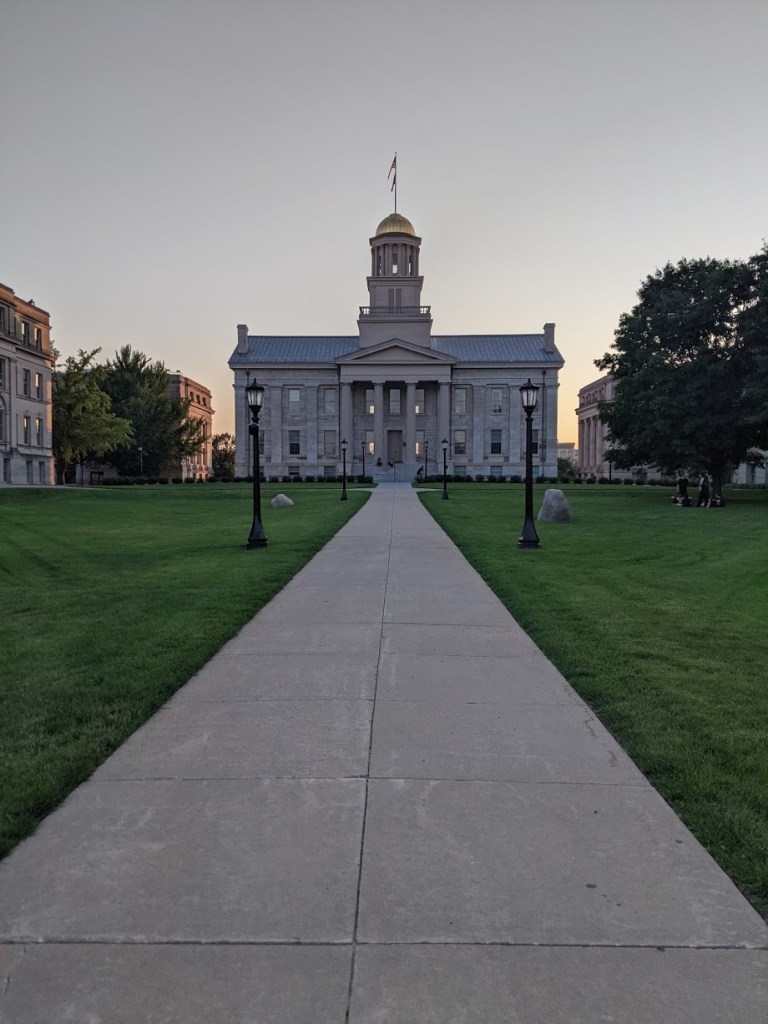
As the name implies, it used to be the original state capitol of Iowa (like Corydon was for Indiana) before the state government moved its affairs to Des Moines.
But since that switch in 1857, the Old Capitol has been the property of the University of Iowa — in fact, the entire school operated within its confines for the first six years after Iowa got a new capitol.
The gem of a building is now smack-dab in the middle of the “pentacrest” of dorm buildings and school halls. That Thursday night, I saw a drama club rehearsing in all black under the tree (pictured), and two friends enjoying a conversation on its front steps. I can tell that the Old Capitol Building gets as much love, if not more, than it did almost 150 years ago. It’s a charming little place.
Moving On From the Big Old Goddamn Thing
Well, that was lovely, indeed — how about a drink?
The sun was out, and I was thirsty. What about these rooftop bars I read about?
Lauren at the front desk recommended either Joe’s (“which gets crowded, but everyone loves it”) or VUE (“which is pricey, but has a great view, obviously”).
I like to be with the people. Joe’s it is.
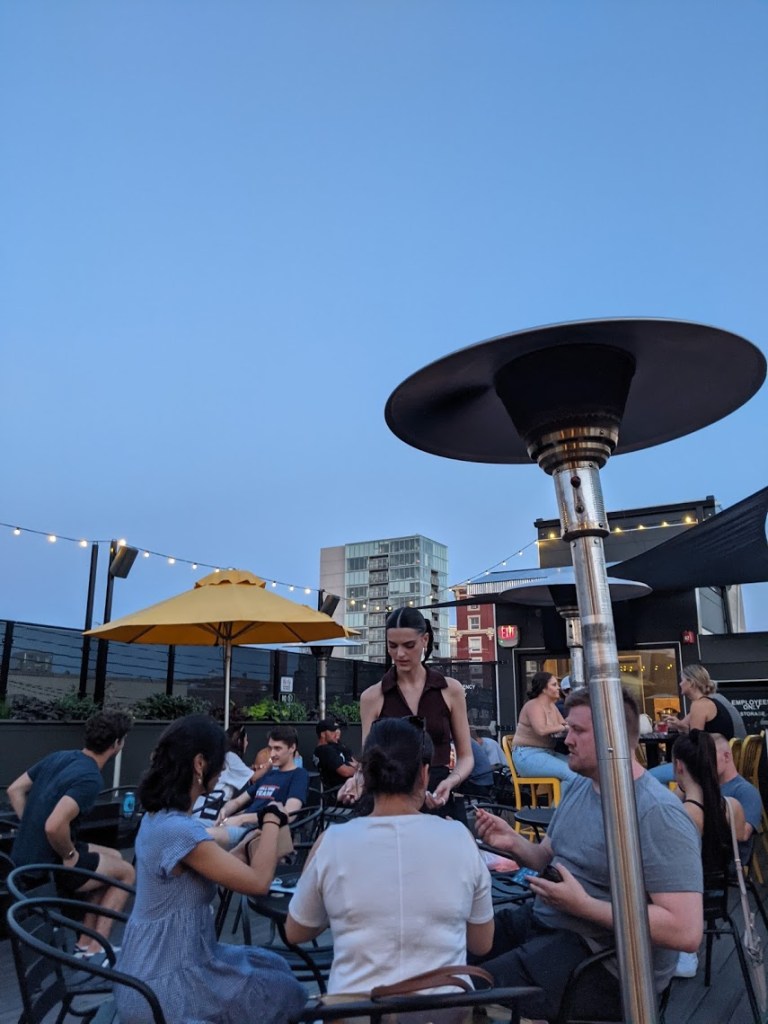
Joe’s Place is the sort of cram-’em-in, fill-’em-up bar where you could very well lose track of a friend, even if the lights are on. The insides look like an old wooden ship, but the rooftop patio is cool and sporty, painted green like a baseball dugout. I sat by myself and watched the sun set on Iowa City as small groups of college kids — having it made on the first day of July — chatted among themselves.
Joe’s is cute. I got a stamp on the hand, which is standard fare, as well as two wooden nickels for “Nickel Thursday.” Although they each promised $1 and $2 off drinks, respectively (not sure if that was a mistake), I forgot to use mine and ended up giving them to some chillaxed frat bros before stepping out the door.
Finding an Even Smaller Thing
Something quaint about Iowa City is that it’s not afraid to rock a “Wild West” vibe.
Sure, it’s a modern place — no horse hitching posts in sight — but if you can squint your eyes just right, you can see how the sight lines of popular restaurants and bars could pass for taverns and saloons.
And partner, when you see a bright-red awning labeled “DEADWOOD,” with a 1970’s Italian coupe parked outside, you just know you have to step inside.
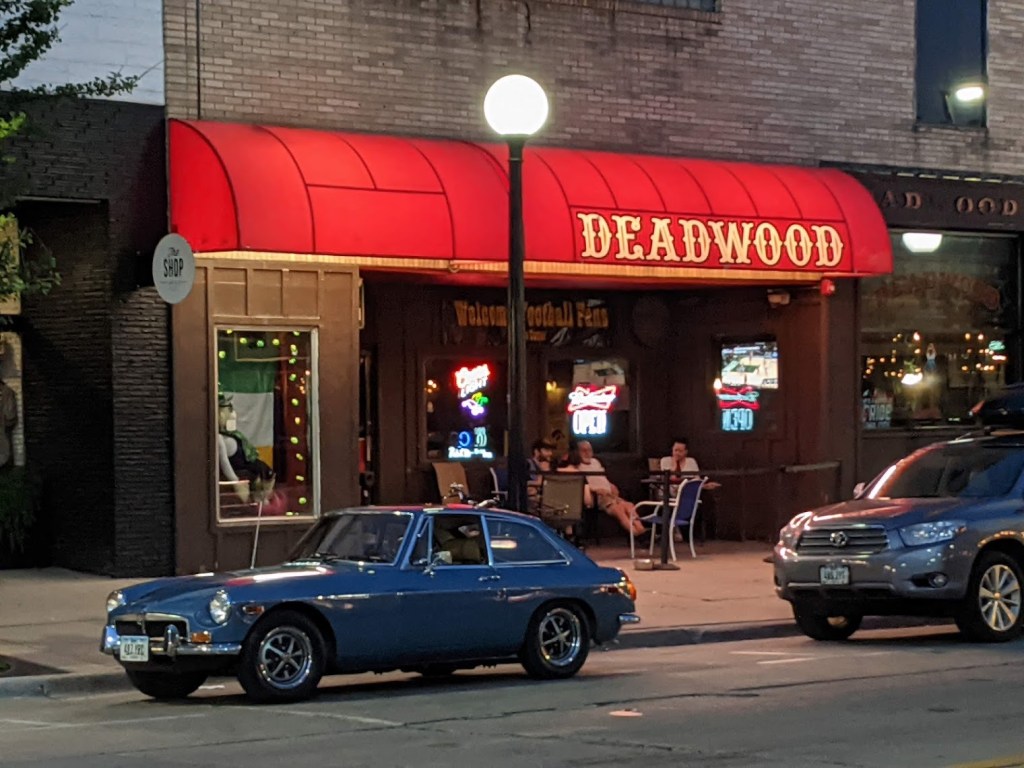
DEADWOOD is definitely a dive bar. The sort of place that smells halfway between a bowling alley and fresh cigarettes. The lights were off, and I took on a wobbly green barstool on the wooden table. There were 3 or 4 pool tables, but nobody was shooting cues at the moment. A few pinball machines sat unused in the back room, and “Ant-Man and the Wasp” was rolling silently on the bar TV.
The bartender asks what I’d like to drink. I only have time for one more, so I begin to think, slack-jawed and vacant, as another voice speaks in front of mine.
“Tito’s and Soda.”
To my left, an older man with gray hair and a gentle smile leans over, but doesn’t take a seat. He makes eye contact with me.
“Oh, oh dear. I spoke in front of you didn’t I?”
I laughed to myself and told him it was fine. I had no idea what I wanted, and it would be a moment for me to figure it out.
“Well, lemme buy it for ya. HEY,” he waved to the bartender. “Please let me get this gentleman’s drink for talking over him.”
“Oh please, you don’t ha-“
The bartender came over and asked what the man is buying me. I said a Budweiser (Dad’s favorite), to be simple.
I thanked the man and introduced myself as being from Indiana. I asked to know a little more about him, and where he was from.
This gentleman, Rory, told me he was born “a few miles that way,” on the west end of Iowa City, and has only come thus far in his time. He is a bartender at The Dublin Underground, an Irish bar across the street, a job he has held for 29 years.
I told him that I turn 31 in a handful of days, just to mess with him, and we clinked glasses.
“I’ve been serving people since you were 2 years old. Wow.”
“Hey, you just bought me a drink. Thanks.”
I asked Rory if he was a big Iowa sports fan, and he said yes. I asked who Iowa’s rival is, to him, and he said “Nebraska, those fuckers. Ain’t nothing do there anyway.”
Another guy down the rail chirped up: “Yeah, fuck Nebraska!”
Rory smiled and said the Iowa Alumni Marching Band actually has a song prepared for when they play the Indiana Hoosiers. I asked how it goes, and he obliged:
“Indiana, Indiana…
Indiana, Indiana…
Indiana, Indiana…
Indiana…FUUUUCK YOU!”
I laughed and he immediately started singing a similar faux-tribute to Michigan called “Hail to the Fuckwads.“
Some younger folks were outside having a cigarette, so I figured I’d go chat with a few people in my peer group to ask what someone our age really needs to see before, say, 11 a.m. Saturday.
Dave, a scraggly-faced dude with long, curly dirty blonde hair, told me that Elray’s — the same music venue Lauren at the front desk recommended — was a must-see. I didn’t go there on Thursday, but it’s a possibility for tonight.
I asked him about “that place over there,” where Rory “was a bartender,” and if I should see The Dublin Underground.
A tall woman in a choker named Attica (“like the prison riot,” she said) told me that I had half the facts right — Rory isn’t just a bartender. He’s an owner. He was born in Iowa, but he’s a direct descendent of a true Irish immigrant. He and his siblings retain dual-citizenship between the United States and Ireland. The bar, simply, is his passion. Attica called it “a true, true Irish Bar,” but that Rory is sometimes too shy to tell his story.
Almost on cue, Rory stepped out of the bar, having finished his Tito’s and Soda. Acting like I hadn’t just heard what I did, I asked him when he worked next, and he said “tomorrow!” I told him I might just come by, and he said he’d love to see me. We shook hands and parted.
Will we see each other again? I don’t know. It’s hard to say. I might drop by tonight.
But in the event we never cross paths again, it’s a delight to know this for sure: I saw the Biggest Goddamn Thing on my very first night, as expected.
It wasn’t the Old Capitol Building. It was Rory.
###
-moose
PS: This post’s featured image is a tribute mural to Ben S. Summerwill, who I’d describe after reading his biography as a “banking cowboy.” Born in Iowa, he moved to South Dakota to be a six-shooting, horse-riding cattlehand. The Great Depression put his business operation under, and he returned to Iowa in search of work. A bank hired him to help liquidate other failing banks during the scary financial time. Forged by his own life, he found empathy for the people, and lent families money through the otherwise-closed outlets, an unusual move. Eventually, the people tapped him on the shoulder to make his own bank, and to compete with the monopoly of one bank that owned everything in town. Today, his Iowa State Bank & Trust Company (now “MidwestOne”), is worth $3.2 billion. Whether you view him as a folk hero, or a symbol of capitalism at large, I think he’s a distinctly American character, and I’m glad to have learned more about him here in Iowa City.
 B-TOWN Moose