
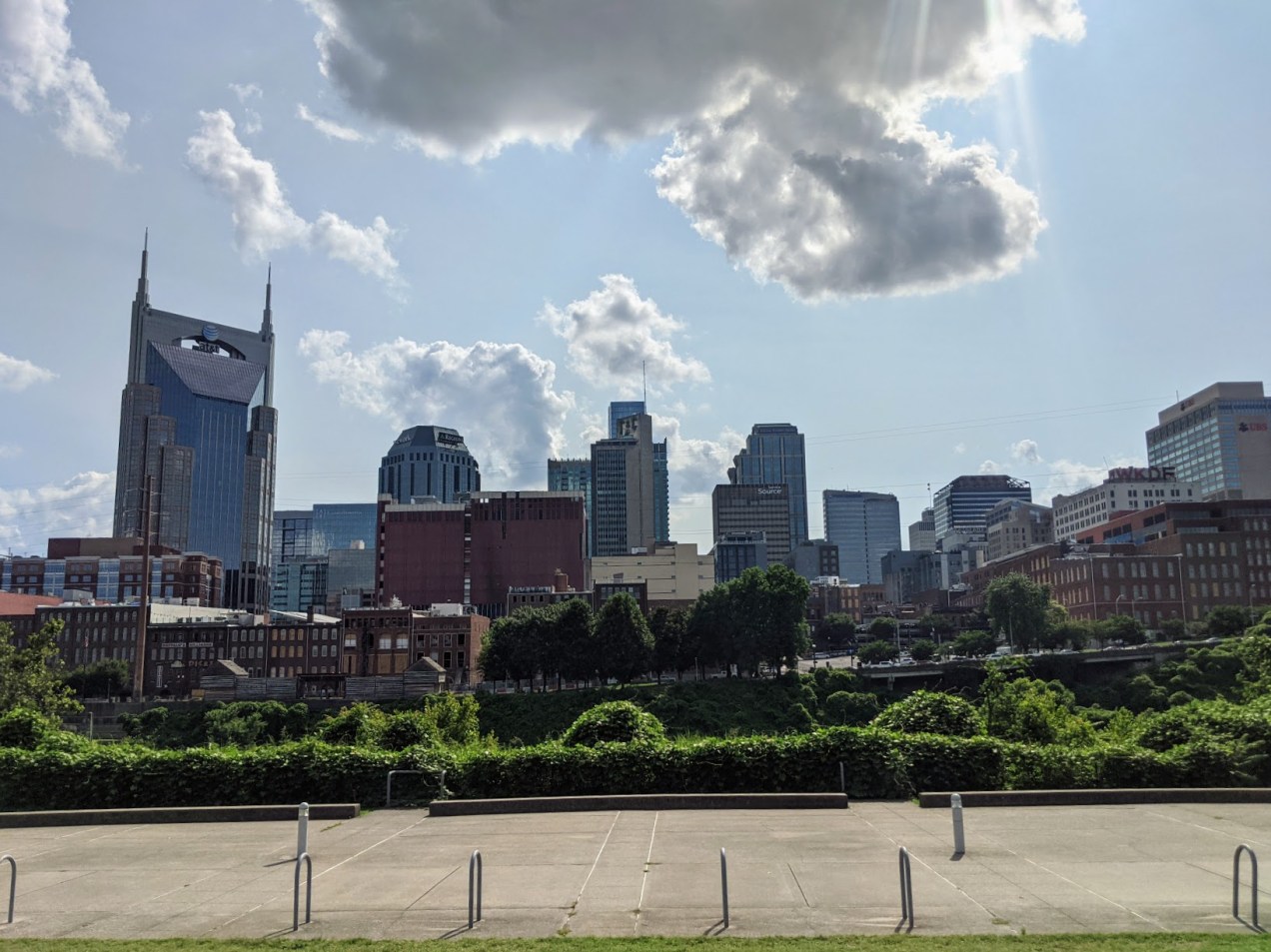
KNOXVILLE, Tenn. — One of the unfortunate downsides about cramming so much travel into my schedule is that I frequently find myself pinched on time to actually “see” each location — especially the bigger cities.
So on Wednesday, when I only had about a few spare hours with which to actually get out of my room and see Nashville, Tenn., I chose to sign up for one of those token rooftop bus tours and hope for the best (well, the “best” that $39.50 can get you).
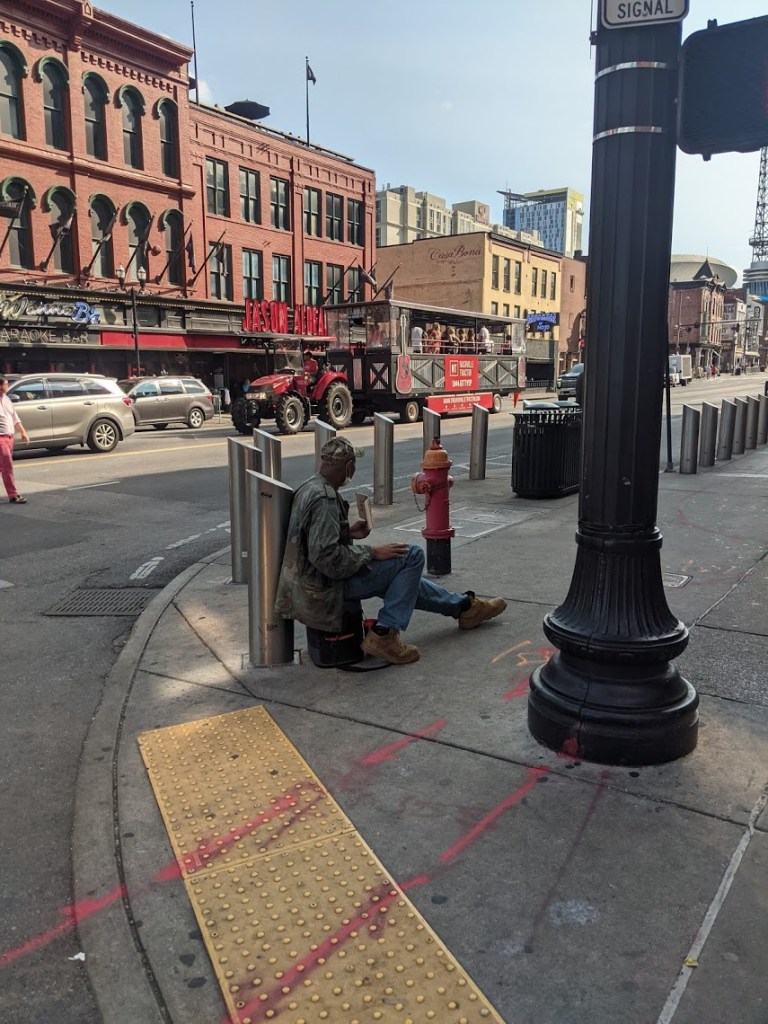
I’ll be honest with you: I always feel weird about tour-guided vehicle trips like these. There’s a lot of social implications at play between the tourist and the daily citizens they observe: You’re on vacation (and they are at work). You’re from out of town (and they are stuck behind your bus). Firetrucks and ambulances are screaming through every intersection because someone is about to die, God-damn-it, and you’re on a big dumbass double-decker bus trying to get an ironic picture of Kid Rock’s Big Ass Honky-Tonk Rock N’ Roll Steakhouse. You’re being chauffeured through city in a double-decker, 120-seat convertible while an open mic emcee reads you fun facts about just how much this unprecedently posh apartment costs while unhoused people are sleeping on the sidewalk below.
The tour itself begins about 1,000 feet from where a car bomb infamously exploded in downtown Nashville on Christmas Day of last year.
It’s a lot, man.
I sat on the top deck so I could see everything without a window in the way. I sat on the right side so there wouldn’t be too much traffic in the way, either. I used by messenger bag as a seat cushion, put my hands in my lap, and went along for the ride.
Our tour guide was John, a self-proclaimed musician of 22 years in Nashville. He was kicking off our 4 p.m. gawk-fest in the dead heat of the Tennessee sun. He wore cheap Ray-Bans, had a baseball cap pulled way low over the glasses, and spoke with perfect equilibrium between “seriously, you’ve been a lovely audience” and “if I have to read this script one more time, my soul is finally going to leave my body for good.”
One thing I quickly learned during the trip, however is this: I think John really hates modern art.
When you have to lead a trip for several dozen, maybe 100 people, I get that it’s efficient to stick with some cheap jokes and structured facts about unusual things around you.
But when it came to things like architecture and public spaces, John seemed a little too stand-up jokey about it — he insisted that he should have listened to his mother and gone to college, because he would get to be a real artist who got paid big time for doing this and people would actually look at your work.”
Heavy shit, if you view it as something beyond cheap jokes.
Whatever the tone, John specifically railed against three pieces of modern art. I liked them all and I’m prepared to defend each.
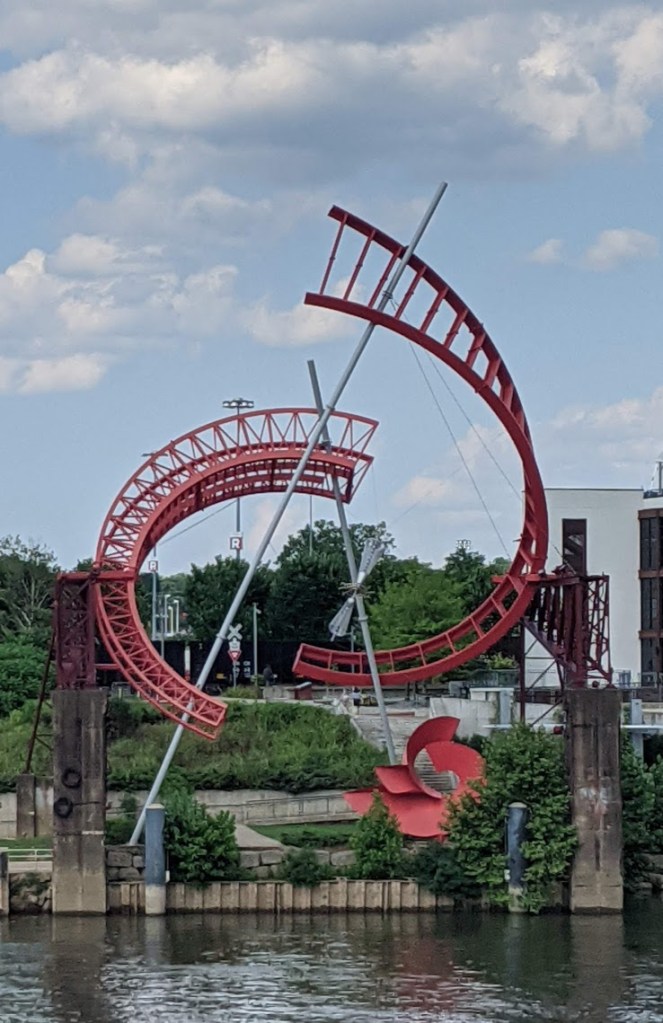
First, There was “Ghost Ballet,” a 100-foot-wide, curved statue of metallic rails and tracks. Alice Aycock, the sculptor, described it as thus: “It changes as you move around it — It suggests a certain kind of movement, dance movements, which is why I refer to it as a Ghost Ballet.”
John said “that’s our unfinished theme park.”
Then, there was “Stix” (pronounced “sticks”). Since Tennessee is/was home to many indigenous Native American people, the sculpture was interpreted by locals as falling arrows. Artist Christopher Moeller himself disagrees. “Actually, that was not my original intent. The only reference to Native American art I made was showing an image of a beautiful totem pole at an early stage of the project development. I did this in order to give an example of how the colors I proposed to use would contrast with the grayish, silver patina that the wooden poles would develop over time.”
John joked that it’s actually a bunch of trash that a construction company left.
And lastly, there’s Music City Center, which is Nashville’s sleek, state-of-the-art convention center and performance space so subtly curved as to resemble a giant acoustic guitar. Some of the interior rooms are also shaped like mandolins, fiddles, and pianos.
John said that at least he could actually play an instrument.
The bus kept whisking us through the city, whooshing by honky-tonks, and washing our faces with stray tree limbs that bristled against the top deck.
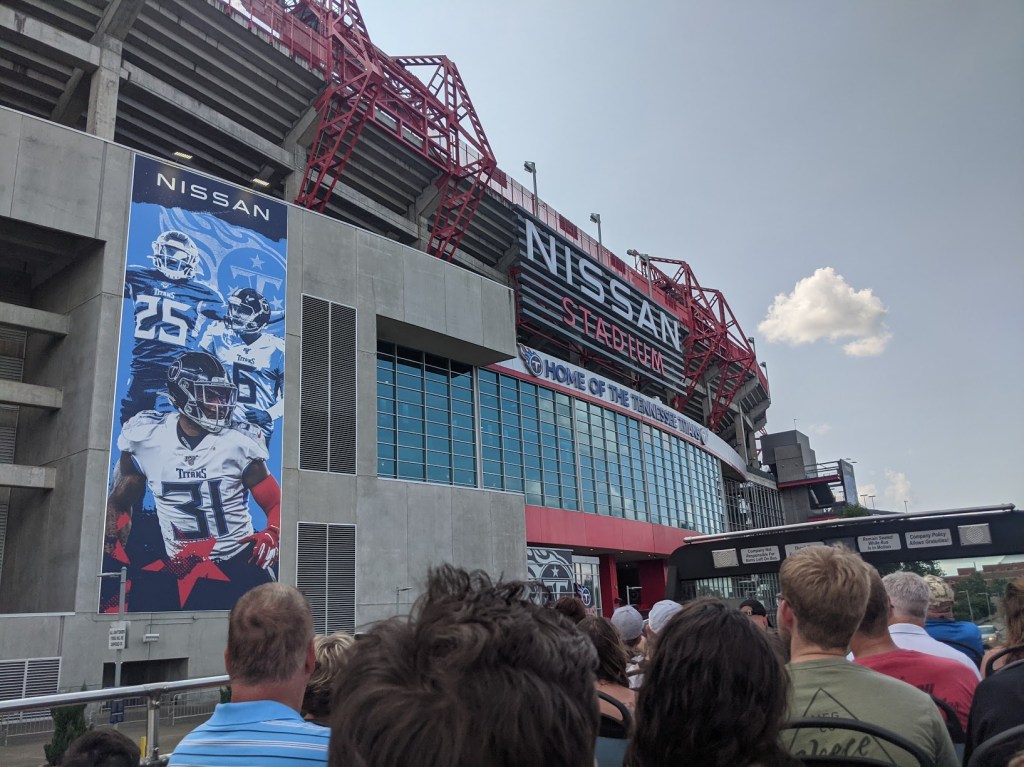
John and his driver on the bottom deck took us through a lot of pretty cool Nashville must-sees: Broadway, Vanderbilt University, the Parthenon, Knoxville’s World’s Fair site, “the Batman building,” Nissan Stadium, Bridgestone Arena, Taylor Swift’s personal loft, the state capitol building, the Grand Ole Opry (Ryman Auditorium), the local federal court where Jimmy Hoffa testified, a bunch of museums on country music, and even John’s personal favorite craft beer bar, which actually came off as genuine and endearing (note: it did not have any sculptures outside).
So not as to seem too meta or contrarian, I did learn some genuinely cool facts about Nashville on the trip. Here are two solid facts I think anyone who’s still reading my schlock here could stand to know:
1. Nashville’s “Music City” nickname has nothing to do with country or rock music.
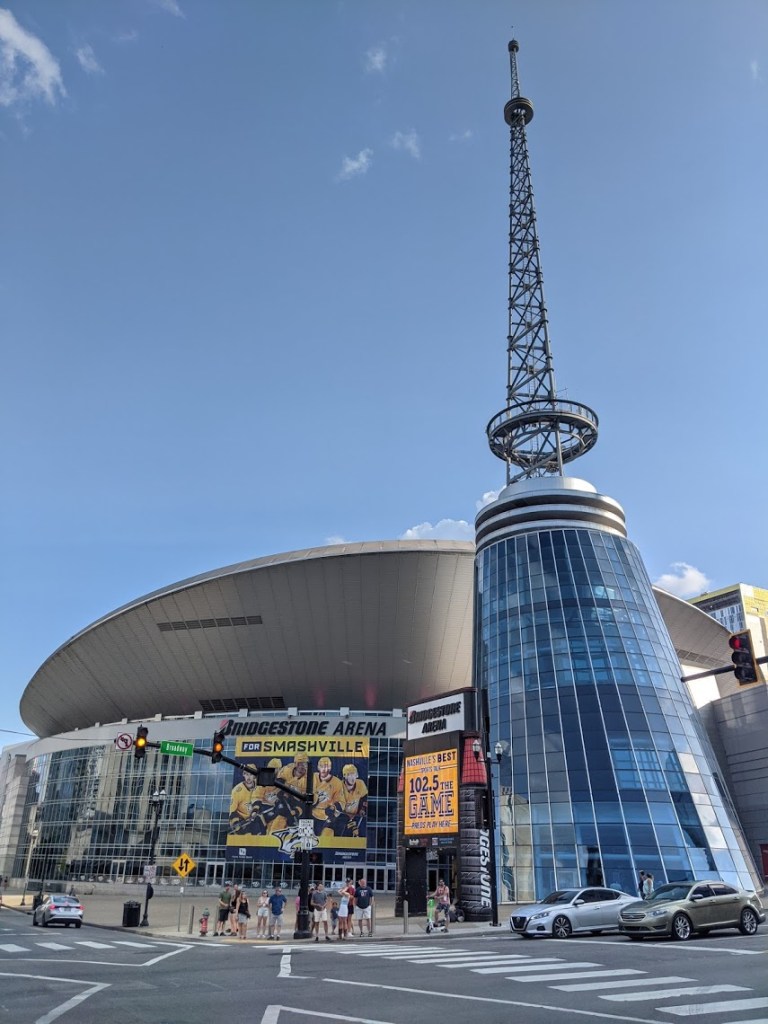
The moniker was actually bestowed by Queen Victoria as a gift from England. Nashville’s Fisk University, the first U.S. institution to offer liberal arts programs to African-Americans, was organized in 1866. By 1871, the school was in hard financial straits, so it assembled a band of Jubilee Singers to tour and raise money for their academics. Their tours took them all over the world, including performances for President Grant in 1872 and Queen Victoria in 1873. Victoria was so impressed by the Fisk Jubilee Singers that she wrote a letter to the city of Nashville saying they clearly came from a “musical city.” Nashville accepted the high praise and took its reputation from there — which may have in turn inspired the pop culture boom we know and associate it with now.
2. Many bands in Nashville bars earn very little for playing live music.
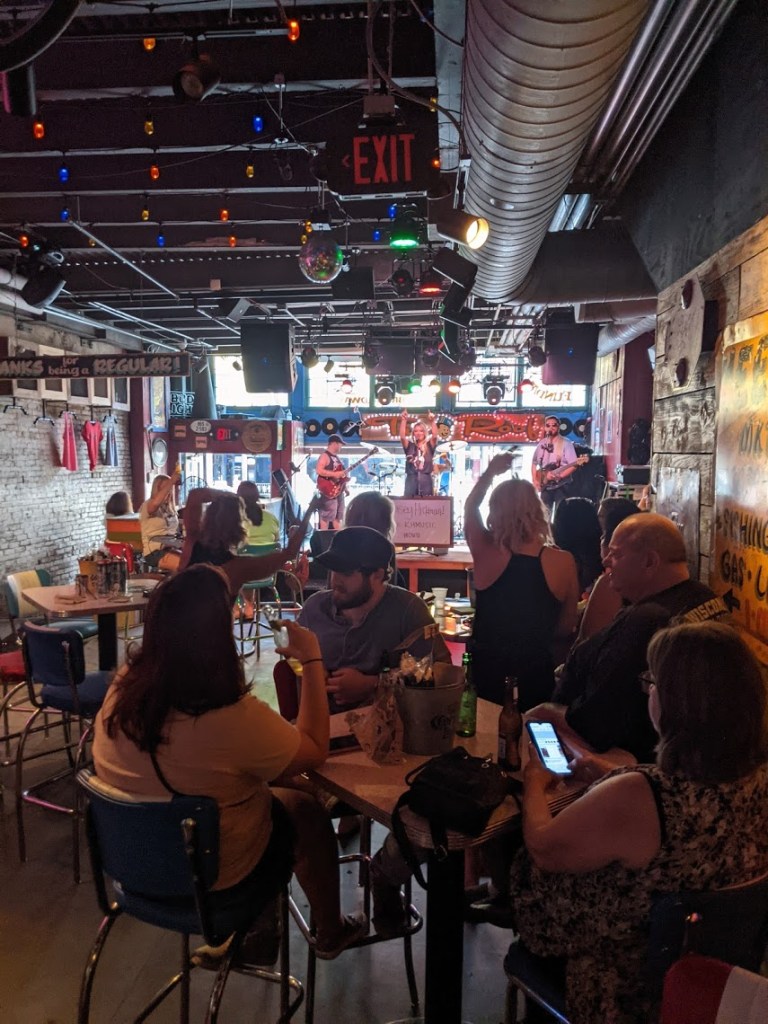
It’s a complicated picture, but hang on with me here:
According to our tour guide John, bands that play in honky-tonks (being defined as having live music from 10 a.m. to 3 a.m.) don’t get paid at all, a statement he made from personal experience. According to some independent blogs, the bands get paid between $20 to $50 per member per night, and $60 is a “pretty good average.” Some folks who have written the paper say it’s a “stingy” pay rate. Ruble Sanderson, an 85-year-old CEO of various entertainment destinations in downtown Nashville, wrote into The Tennessean saying Nashville clubs “pay their performers well.”
But for the brief period where I popped in between the Tin Roof, the Lucky Bastard Saloon, and Tootsie’s Orchid Lounge, each performing act passed around a tip bucket and had a Venmo account posted near the front of the stage. I’m typically more inclined to believe employees than CEOs on the very premise there’s more employees than CEOs, let alone the earning discrepancies, but it was certainly an eye-opener that the live music capital of the world might be really underwhelming when it comes to musicians who perform all day.
In any case, I had my due skepticism about forking over $40 to sit with several dozen strangers on public transportation as a jaded local artist went through his usual monologue of facts and insights.
But I’m very glad I chose to invest 60 minutes of my limited evening to John and his monologue, and I feel like I have a genuine appreciation of what makes Nashville so special.
###
-moose
PS: I’m here safely in Knoxville, Tenn. I’ll write a wrap-up post of other notebook items on Nashville tomorrow morning, then quickly pivot to writing about things here in Volunteer country.
Thanks for your continued time and attention. It means more to me than you’ll ever know. ❤
 B-TOWN Moose
Pingback: NASHVILLE, Wrap-up: ‘Imaginary Q and A’ | Moose On the Loose