
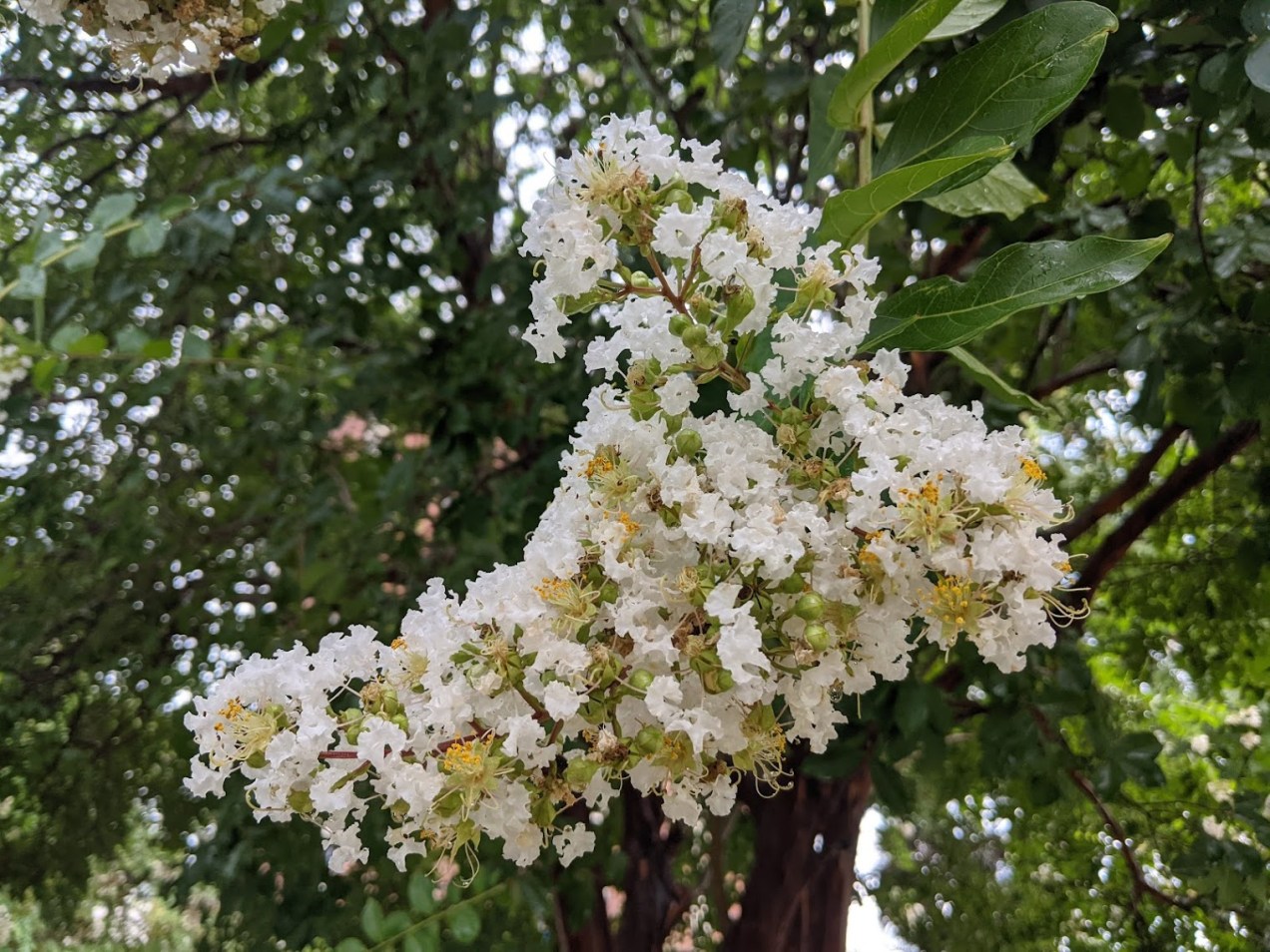
COLUMBIA, S.C. — I’m having a really hard time finding the words I want to say about Columbia.
So let’s jump right into it:
Columbia, South Carolina, was the early heart of the Confederacy — a period of American history (or treason) I look back on with much contempt.
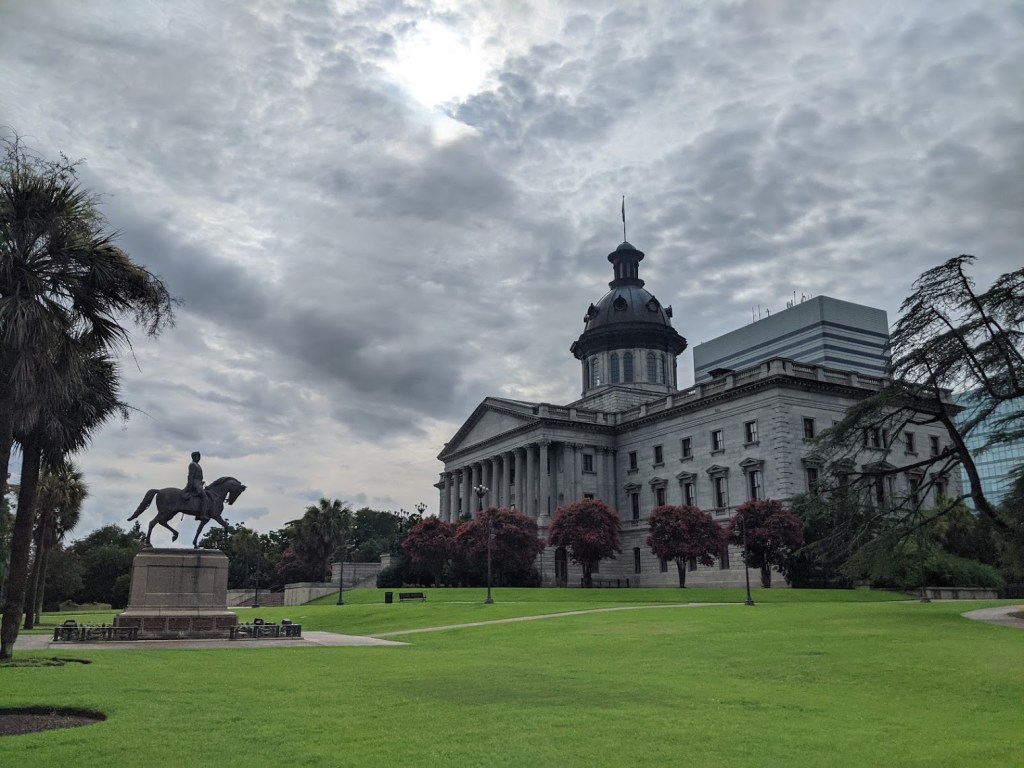
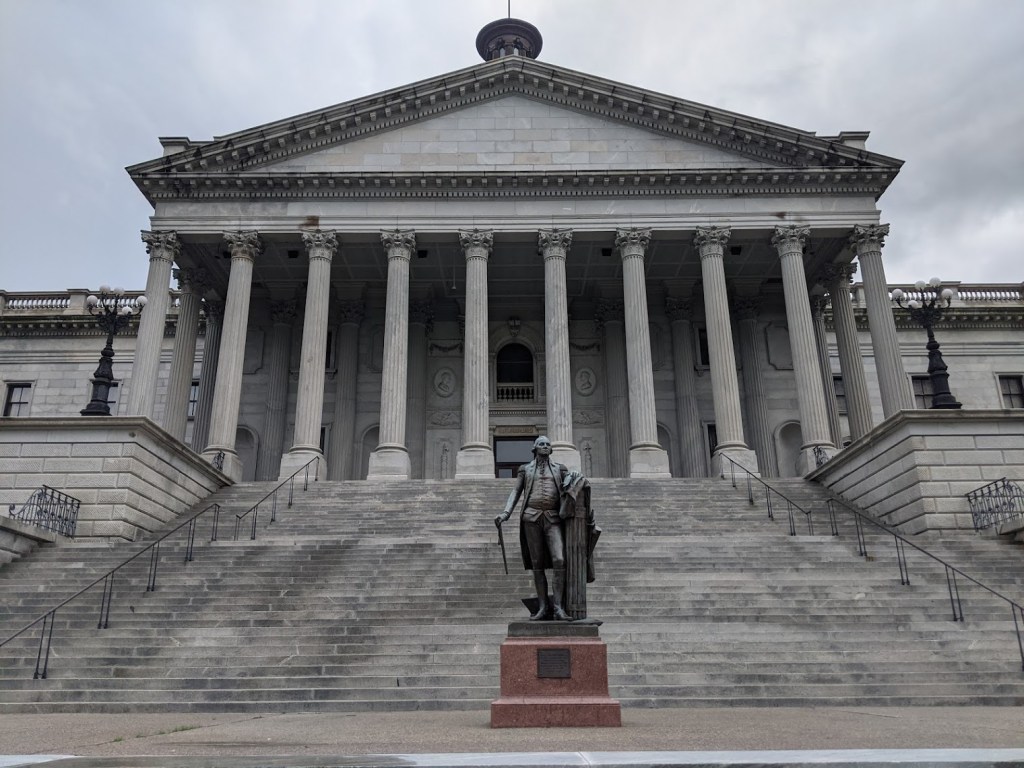
At the South Carolina State House (pictured at the top of this post) — about 4 blocks from where I’m staying — South Carolina’s secession convention voted to become the first state to withdraw from the United States in 1860. As the entire U.S. (including northern states) reckoned with the morality and legality of slavery in the brink days before the Civil War, South Carolina’s white male landowners, whose families and fortunes relied on enslaved African Americans for nearly all aspects of stability — financial, social, functional — acted quickly to leave the nation altogether when faced with the prospect of changing their ways.
Freedom for the enslaved? Due payment for workers?
“Fuck that. We’re quitting. America is dead to us. That’s how much we value having slaves. They’re our God-given right, and we’re willing to kill a lot of fellow human beings with rights to keep that power dynamic.”
The way I look at it, that’s what they said and did — implicitly, explicitly, or otherwise. And they wanted to be the first to say it, loud and proud.
On December 17, 1860, the all-white delegation voted unanimously in favor of secession, 159-0.
Now, before I get ahead of myself, let’s be realistic about my vantage point in 2021: We have the benefit of hindsight. We know how this story ends.
The Confederacy built a legion of like-thinking southern assemblies, repositioned their slave-centric prosperity lifestyle as the buzzword “states’ rights,” and provoked the ugliest four years of violence and bloodshed the nation’s history. Perhaps as many as 1.5 million people died, and for ultimately, nothing: The entirety of the Confederacy would rejoin the Union, and although African Americans were eventually given legal rights upon peacetime, they were only as good as the white majority who would enforce them through segregation and Jim Crow and the Civil Rights Era, which is almost self-explanatory in terms of “justice.”
It’s easy for me to look back and make a mockery of the Confederacy and/or slaveowners, as I see them: They were seditionists. Traitors. Losers. Weaklings who insisted on capturing young, strong people and sentencing them to a life of work so they didn’t have to — or arranging a hellishly, ghoulishly cold bargain for the highest bidder (i.e., “take the son, separate the mother — she won’t be useful to us”). Some plantation owners even conscripted their own slaves into fighting in the Civil War for their own bidding.
The entire thing evokes little sympathy from me. “It was a different time.” That’s right, and a worse time, too. And while the last living Confederate soldier only died in 1959 (during the Space Race — think about that), I’m free to say exactly what I think about their cause.
Perhaps 50 or 100 years from now (maybe next week), someone will inevitably write about you, me, and our era as barbarian, and that’s a time I look forward to, wherever I’m at, on earth or from another realm — that’s called progress.
As I’ve made clear from the get-go: While I’m enjoying myself and my travels (and it sometimes hinges on feeling like vacation), this is, above all, 31 days I have set aside for intentional, experiential learning. And the prospect of breaking my saccharine stream of craft beers and cute hotel décor and whimsical little anecdotes for something so serious loomed heavy in my mind for the past 24 hours. Will I say anything that we don’t already know? Will anyone listen? Is this all a futile attempt in the grand scheme of humankind’s atrocities?
Alas, it’s a necessity that I speak the truth. That’s the concept here. Shine a light on reality. Have the uncomfortable conversations. Relay what you’ve learned and grow as a person — maybe someone else will, too.
So after my remote work session ended today, I strode into the city to take note of how Columbia — a state capitol now 156 years removed from the Civil War — handles its own legacy.
The answer, predictably, is complicated.
And it depends on which side of the block you happen to be standing on.
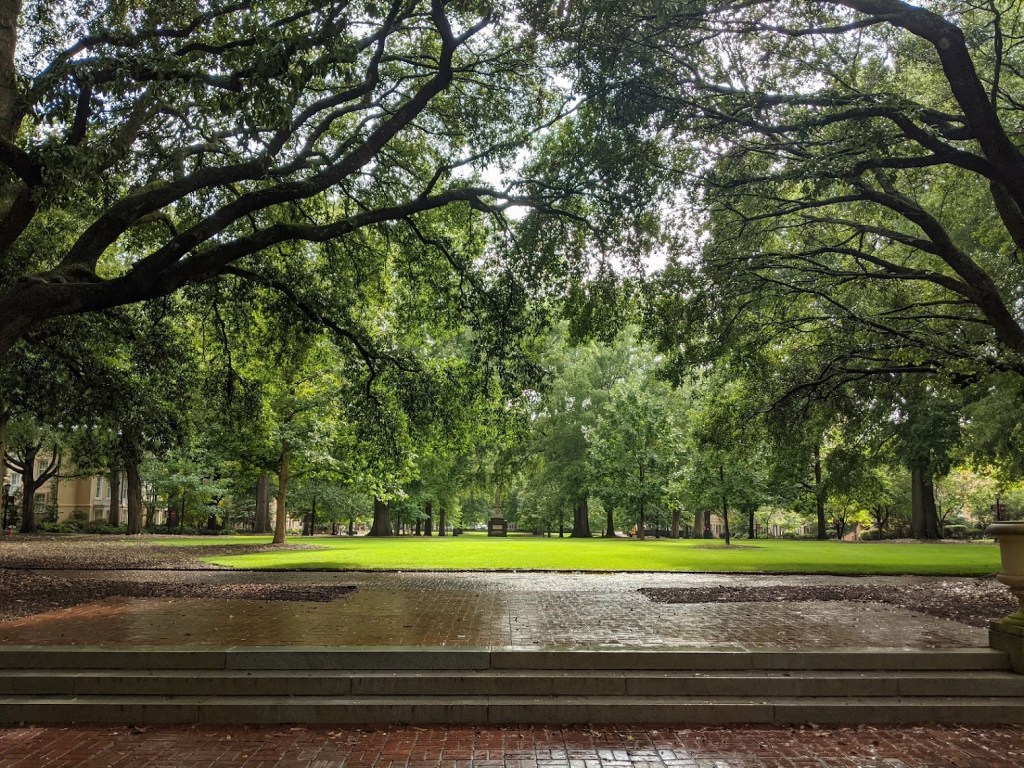
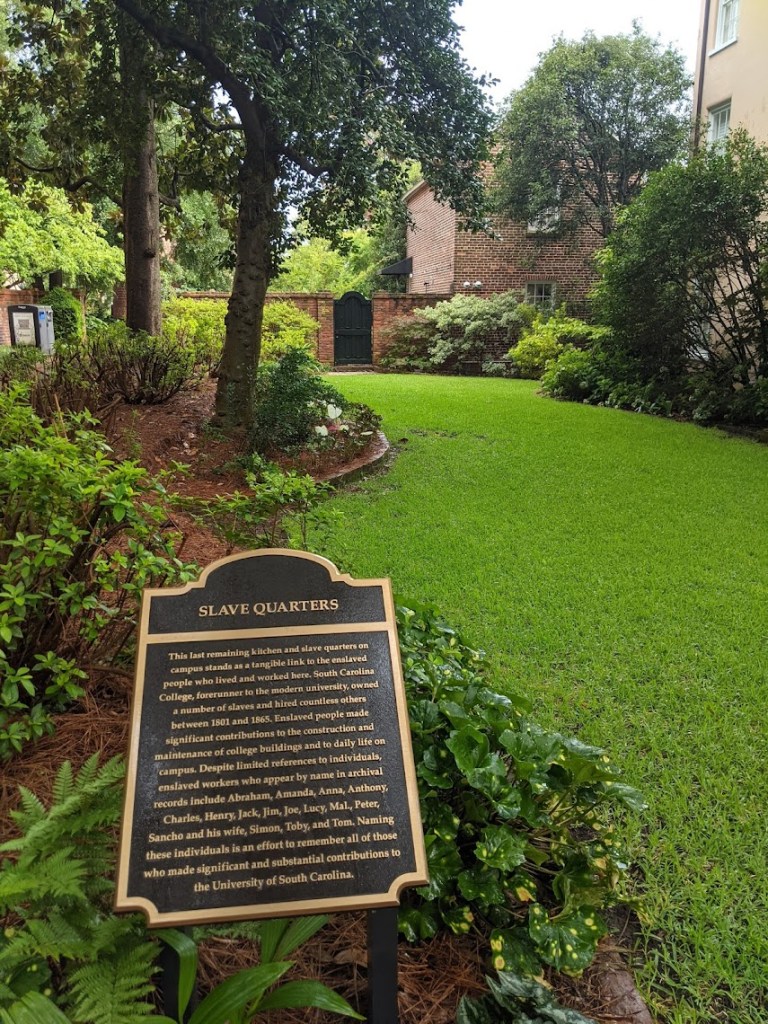
Today, the University of South Carolina transparently displays how much of its history can be attributed to enslaved African Americans at pretty much every physical landmark opportunity. I took a soggy, post-rain afternoon walk through “The Horseshoe,” USC’s group of classic, historic buildings. At “South Carolina College,” the original “forerunner” to USC, the institute and its buildings were substantially built by slave labor, and slave-built bricks. A plaque in the heart of The Horseshoe today makes clear all of the USC’s historical regrets: That many of the slaves were owned by faculty or the university itself, and that other slaves were sometimes borrowed from private citizens to complete university projects.
Enslaved people lived in the outbuildings, and the former slave quarters/kitchen that used to serve the president’s house still stands today — feet from where the current USC president lives in the Horseshoe — as a testament to the reality of origins of the campus.
But walk a few blocks north, to the same state capitol building I mentioned earlier, and you will still see Confederate statues today, boasting proud missives about their soldiers’ exploits and values.
In fact, the tribute to the Confederate States of America, which faces north, standing close to 50 feet tall — overshadows the mere life-size statue of George Washington on the foot of the capitol. (I figured it would be the other way around, if the Confederate tribute existed at all.)
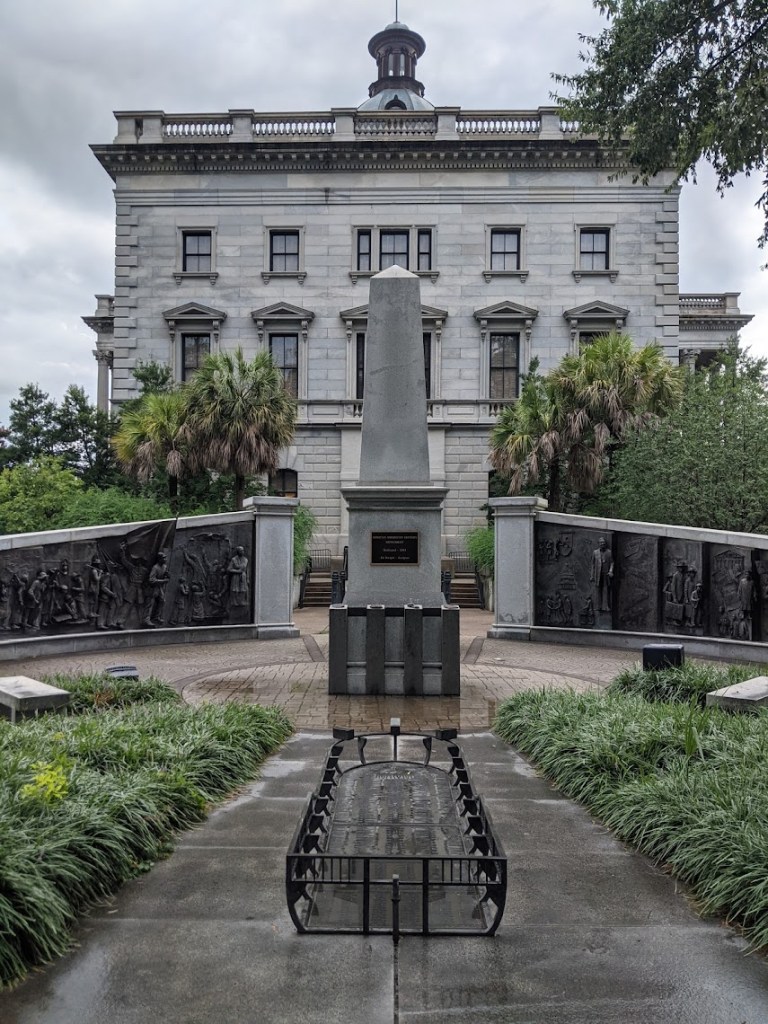
Another larger statue on the south lawn pays tribute to Wade Hampton, the 77th governor of South Carolina and a prominent general for the CSA, riding triumphantly into battle. His statue stands a few hundred feet away from the African American History Monument on the east side, dedicated 2001.
This is where the discussions about “history” and “idolization” meet the road: To ignore the state’s confederate history altogether? A foolish decision. To keep the gigantic statues which explicitly champion the CSA’s mission and values? Almost unthinkable.
What does one, particularly someone born in my generation — with TV and internet and global economies and pluralistic societies and a diverse friends group — do here? It wasn’t our decisions to put the statues and monuments there, but the decision of action vs. complacency (“if you choose not to decide, you still have made a choice“) rings true in our heads with every second we live and breathe on this earth.
Unfortunately, the closest thing I have to an answer (let alone any semblance of a “solution”) comes from a place of privilege: In 2012, when I took a travel-abroad college spring break study course on Ernie Pyle’s journalism during World War II, I went to a handful of museums that collected and stored Nazi memorabilia — front and center, as it appeared during the height of the Third Reich — as a lesson in posterity.
The thought process is this: The historic artifacts are there for anyone who wants to see them, but by and large, these are extremely taboo things that lay citizens cannot own — you have to have a permit, or a vested interest as a scholar or historian, just to deal in such items.
On the other hand, go to any gas station between Kansas and Kannapolis, N.C., and you’ll probably see a Confederate Flag ash tray on sale for $3.99, or a pickup truck with a stars-and-bars license plate out front. In fact, I know of a white supremacist tattoo artist in Bloomington who was notorious for sneaking swastikas into unwitting people’s tattoos. Long story short: the cultural divide between Europe and the United States when it comes to managing the horrors of tyranny and its symbols could not be any wider. And in our era of culture wars, the idea of asking people to stop using something marginal for the greater good of progress — paper straws, gas-guzzling vehicles, firearms — it becomes a culture war whether it costs a penny or a million dollars. The second anyone wants to take something away from anyone else? It’s mine, and you can’t have it.
Today, the demographics of Columbia tell their own tale: Forty-eight percent of the city is white, and 40 percent is black. Whether they’re enrolled at the university, do business in the statehouse, or go to work somewhere in between, Columbia’s role in the Confederacy is still on display, plain and simple, in a variety of historical lights and pride points across town, for everyone to see.
That is, what’s left of it.
What makes the telling of the Confederate tale in Columbia even more complex is the sacking of the town by Union general William Tecumseh Sherman. In February 1865, Sherman’s army burned down much of the city as part of their trail of arson through the South. According to The History Channel (or, the part of it not focused on pawn shops and gator hunting), “this was a calculated effort – Sherman thought that the war would end more quickly if civilians of the South felt some destruction personally, a view supported by General Ulysses S. Grant, commander of all Union forces, and President Abraham Lincoln.”
In that sense, I could see why southern citizens would erect such statues, perhaps as a spiteful defiance of their livelihood being reduced to less than what it was before the Civil War. As I learned during my time in Chattanooga, Tenn., many southerners today, whether it’s in jest or meant seriously, refer to our Civil War as “The War of Northern Aggression.”
Sherman denied that he and his men set the fires, instead blaming it on fleeing Confederates and a windy night, but said nonetheless, “Though I never ordered it and never wished it, I have never shed any tears over the event, because I believe that it hastened what we all fought for, the end of the War.”
More than two-thirds of the city had burnt to the ground. And when Sherman’s men left the city to wreak more havoc elsewhere in the Confederacy, they destroyed most of the remaining structures on the way out.
In that light, it’s a miracle that Columbia — a state capital, remember that — is still around today, even with 130,000 citizens and a major university.
Trying to condense more than 150 years of ugly history into one post, let alone a cohesive “reaction,” is tough. Trying to do so as Yankee outsider? Even more difficult. And with only 43 hotel room hours to make it happen? Nearly impossible.
But I did my due diligence in seeing it myself, and that’s what history is all about.
Frankly, I think Columbia is a very pretty place. USC is a school I’d be proud to attend, and the city is surprisingly affordable and drivable. But there’s a dynamic here that I’ve never had to explore, growing up in a Union state (although many Hoosiers did own slaves), and I’m grateful that Columbia at least offered me a variety of perspectives in which to transparently explore its history — whatever it was.
That’s the idea wherever we go in life, I do believe: Do better than how you fared yesterday, and tomorrow, try to aim even higher. Columbia seems to know this, but I get the sense its story is still continuing to be told, one generation at a time.
And hopefully, people will be there to listen, and learn, and help each other grow in its wake.
That’s not just the American dream — it’s God’s way.
###
-moose
PS: Although I’ve studied the Civil War since grade school, and completed the entirety of Ken Burns’ documentary series on the conflict, I’m sure there are details in this post that are mostly true but maybe missing a few small, yet essential details. I’m always glad to hear constructive feedback at every opportunity.
Columbia is also home to the Confederate Relic Room and Military Museum, a physical space devoted to chronicling every war in which South Carolinians fought, particularly the Civil War. I have my reservations and apprehensions about visiting a Confederate-tinged museum at face value, but as I’ve laid clear above, you can’t properly assess something until you’ve gone there and seen it with your own eyes. Naturally, most of South Carolina’s history during this time will be viewed from a Confederate perspective, not a Union perspective. Although I don’t have the time to consider it on this trip, I wanted to mention it as a rhetorical, locally sourced resource to expand on I’ve written here. Get the full story. Judge for yourself. Acknowledge what’s bullshit and determine what’s helpful information on your own — that’s your right and duty as an adult.
 B-TOWN Moose
Pingback: COLUMBIA, Wrap-Up: ‘Peachy-Keen’ | Moose On the Loose